
New Revelation Inc

AP-5 Feed Additive

Reduce the Cost of Fescue Toxicosis Without Replacing Your Pastures

Core Technology

AP-5 helps cattle handle toxic fescue by targeting ergovaline through binding, deactivation, and circulation support. By addressing the toxin and its vascular effects, AP-5 supports heat tolerance, intake, breeding performance, and calf growth.

Untitled-1

Three Ways AP-5 Helps Cattle Perform on Fescue

AP-5 helps cattle handle toxic fescue by addressing ergovaline through binding, deactivation, and circulation support — helping protect heat tolerance, breeding performance, and calf growth.
fescue toxicosis feed additive

Heat Tolerance

Helps cattle better handle summer heat caused by fescue-related vascular stress.

fescue toxicosis feed additive

Better Breeding

Supports reproductive performance where ergovaline exposure can reduce conception.

fescue toxicosis feed additive

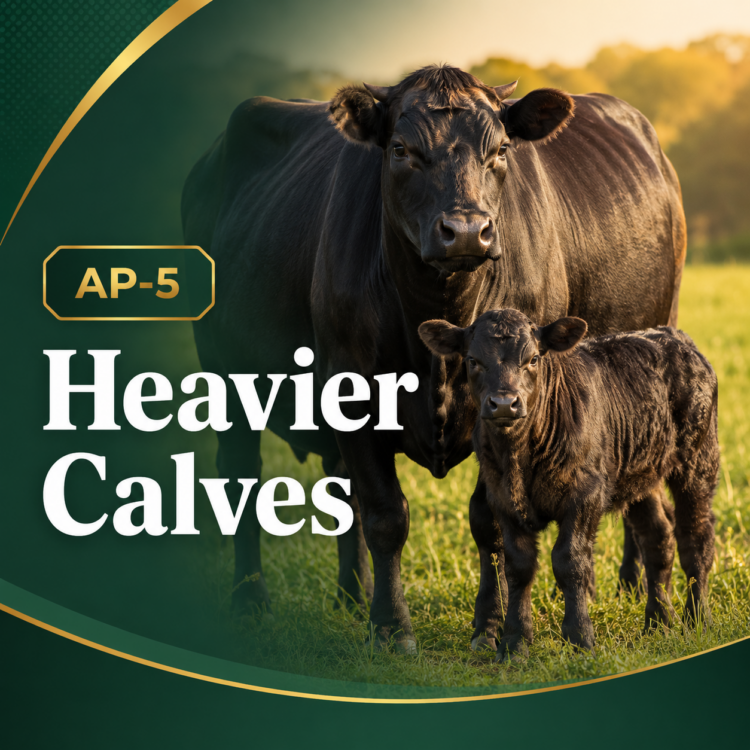
Heavier Calves

Supports cow condition, milk production, and calf weaning weight under fescue pressure.

Field-Proven Performance

Proof at a Glance

Field data shows AP-5 supports cattle on toxic fescue by helping improve body temperature, breeding performance, calf weaning weight, and return on investment.

1.4°F
Lower Body Temperature

AP-5 heifers showed a 1.4°F lower rectal temperature compared with controls in the Angus heifer breeding and temperature trial.

+15%
Higher Conception Rate

The AP-5 group reported a 15% higher first-service A.I. conception rate than the control group.

+63 lbs
Calf Weaning Weight

Missouri cow/calf farm trials reported an average 63 lb improvement in calf weaning weight for AP-5 groups.

19:1
Reported ROI

AP-5 trial materials report an estimated 19:1 return on investment based on calf and cow value.

Untitled-1

Discover AP-5

Reduce Fescue Toxicosis Losses Without Pasture Renovation

AP-5 is a proven feed additive approach built for commercial cattle operations grazing toxic tall fescue.

If you manage beef cattle on tall fescue, fescue toxicosis can quietly cost you every grazing season through heat intolerance, lower conception rates, lighter calves, rough hair coats, and higher maintenance costs.

AP-5 helps cattle handle the effects of toxic fescue by targeting ergovaline through binding, deactivation, and circulation support — helping protect heat tolerance, breeding performance, calf growth, and herd profitability.

  • Targets Ergovaline: AP-5 helps reduce the impact of ergovaline through toxin binding and enzymatic deactivation in the digestive tract.
  • Supports Circulation: AP-5 includes essential oil technology selected for vasodilation, antioxidant, and nutraceutical properties.
  • Protects Performance: By supporting cattle under fescue pressure, AP-5 helps address the problems producers see most: heat stress, conception loss, lighter calves, and higher maintenance cost.

AP-5 Field Trials

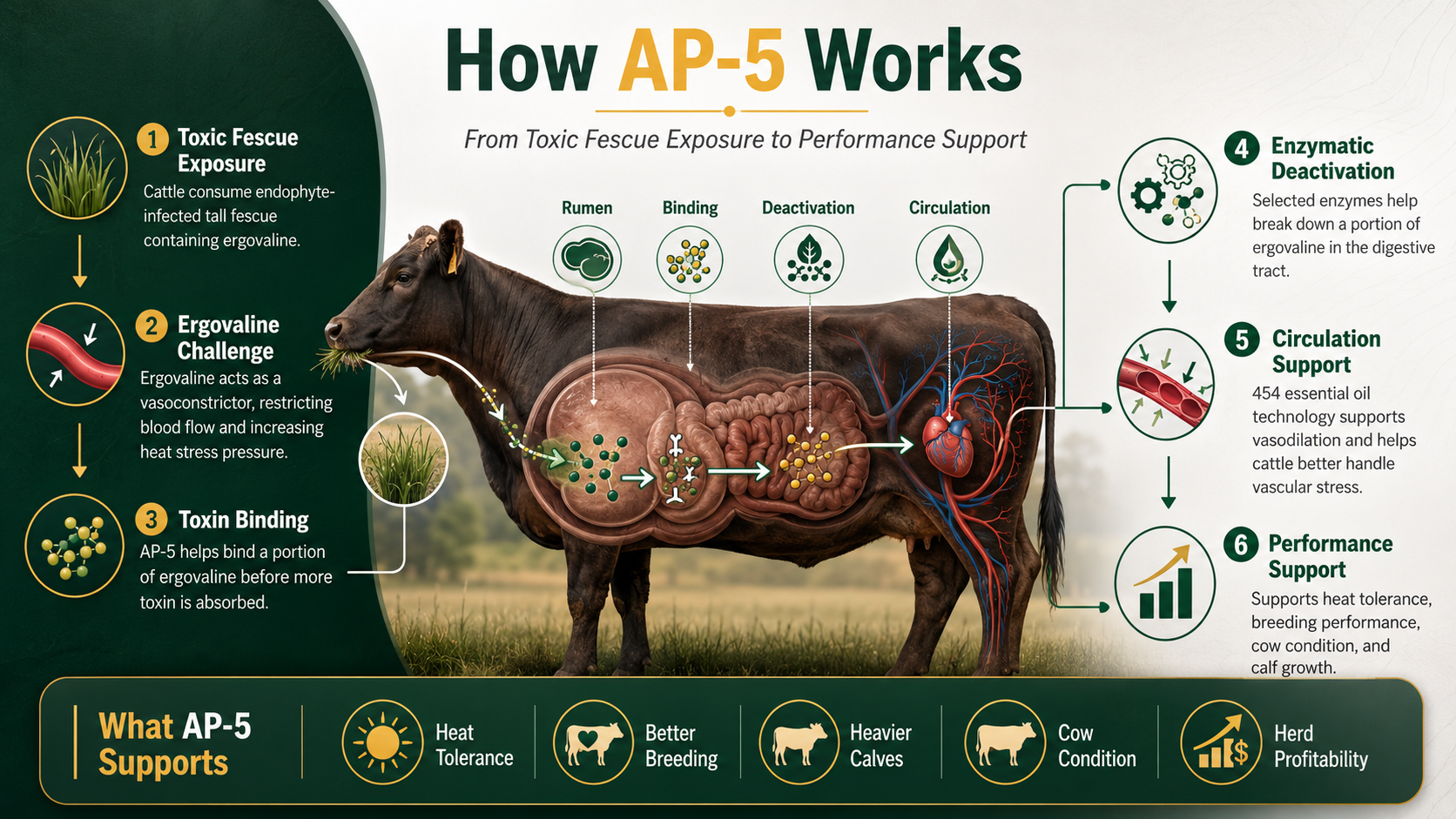
How AP-5 Works

From Toxic Fescue Exposure to Performance Support

AP-5 helps cattle handle the effects of toxic fescue by targeting ergovaline through binding, deactivation, and circulation support.

How AP-5 works in cattle infographic
Inside the Cow

A multi-pathway approach to fescue toxicosis.

Ergovaline from toxic tall fescue can restrict circulation and contribute to heat intolerance, lower conception rates, lighter calves, and reduced performance. AP-5 is designed to address the toxin and its vascular effects at multiple points.

Bind Helps bind a portion of ergovaline before more toxin is absorbed.
Deactivate Uses enzymatic support to help break down ergovaline in the digestive tract.
Circulate Supports vasodilation to help cattle handle fescue-related vascular stress.
Untitled-1

AP-5 Profitability

Turn Fescue Pressure Into Measurable Return

Toxic fescue costs producers through lighter calves, lower conception rates, heat stress, and higher cow maintenance. AP-5 is built to help protect performance without the cost and disruption of pasture renovation.

Toxic tall fescue creates a biological bottleneck: ergovaline restricts circulation, cattle run hotter, intake and reproduction suffer, and calves wean lighter. Over time, those losses compound across the entire cow herd.

AP-5 helps address the problem through a multi-pathway approach: binding, enzymatic deactivation, and circulation support. That means AP-5 is not just treating symptoms — it is designed to help cattle perform better while staying on existing fescue-based programs.

fescue toxicosis feed additive
AP-5 Profitability

Turn Fescue Pressure Into Measurable Return

Toxic fescue costs producers through lighter calves, lower conception rates, heat stress, and higher cow maintenance. AP-5 is built to help protect performance without the cost and disruption of pasture renovation.

$10.50

Approximate Annual Cost Per Cow

AP-5 materials report an annual cost of about $10.50 per cow per year.

19:1

Reported Return on Investment

Trial materials report an estimated 19:1 ROI based on calf and cow value.

+63 lbs

Average Calf Weaning Weight Improvement

Missouri cow/calf trials reported AP-5 groups averaged 63 lb heavier calves at weaning.

+5%

More Bred Cows After 60 Days

The AP-5 cow/calf trial summary reported 5% more bred cows after 60 days.

Why it matters: When cattle breed back sooner, wean heavier calves, and maintain better condition under fescue pressure, AP-5 can turn a hidden pasture problem into a measurable performance opportunity.
AP-5 Profitability Pathway

From Fescue Pressure to Measurable Return

AP-5 is designed to help cattle perform on toxic tall fescue by addressing ergovaline exposure, supporting circulation, and protecting the outcomes that drive cow/calf profitability.

The Challenge

Toxic fescue creates a hidden drag on herd performance.

Ergovaline can restrict blood flow, increase heat stress pressure, reduce reproductive efficiency, and contribute to lighter calves at weaning.

Heat Stress Cattle struggle to dissipate heat under fescue pressure.
Breeding Loss Lower conception rates can reduce total calf crop value.
Weaning Weight Lighter calves reduce revenue at sale time.
01

Fescue Toxin Exposure

Cattle consume endophyte-infected tall fescue containing ergovaline.

02

Vascular Pressure

Ergovaline acts as a vasoconstrictor, restricting circulation and increasing performance stress.

03

AP-5 Multi-Pathway Support

AP-5 combines binding, enzymatic deactivation, and vasodilation support to address the toxin and its effects.

+63 lbs Average calf weaning weight improvement
+5% More bred cows after 60 days
19:1 Reported ROI based on calf and cow value
$10.50

Approximate annual cost per cow reported in AP-5 materials.

15 Days

Visible herd response reported in AP-5 source materials.

85%+

Customer retention basis reported in AP-5 partner materials.

When to Use AP-5

Built for Cattle on Toxic Tall Fescue

Use AP-5 when fescue pressure is affecting cattle comfort, breeding performance, calf growth, or overall herd condition.

Program Fit

AP-5 fits operations that need practical fescue support without replacing established pastures.

Toxic tall fescue can quietly reduce performance through heat intolerance, lower conception rates, lighter calves, poor shedding, and higher maintenance cost. AP-5 is designed to help cattle handle those challenges through binding, deactivation, and circulation support.

Built for commercial cow/calf and stocker programs managing cattle on toxic tall fescue.
Toxic tall fescue exposure
Heat intolerance during summer grazing
Standing in ponds or heavy shade-seeking
Rough hair coats or poor shedding
Lower conception rates
Lighter calf weaning weights
Reduced cow condition
Fescue foot risk in cold weather
Higher maintenance cost per cow
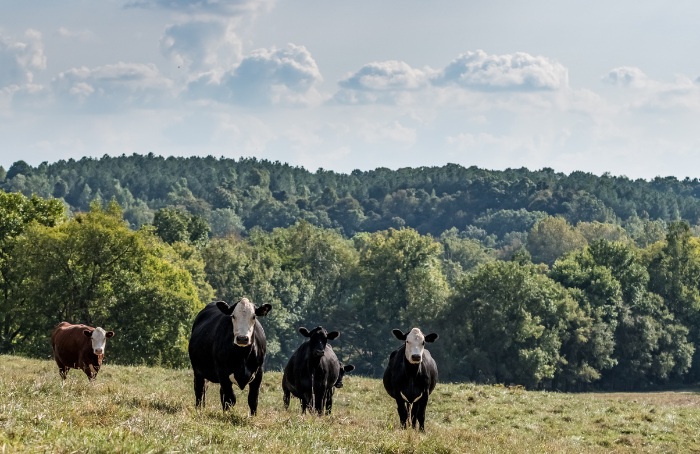
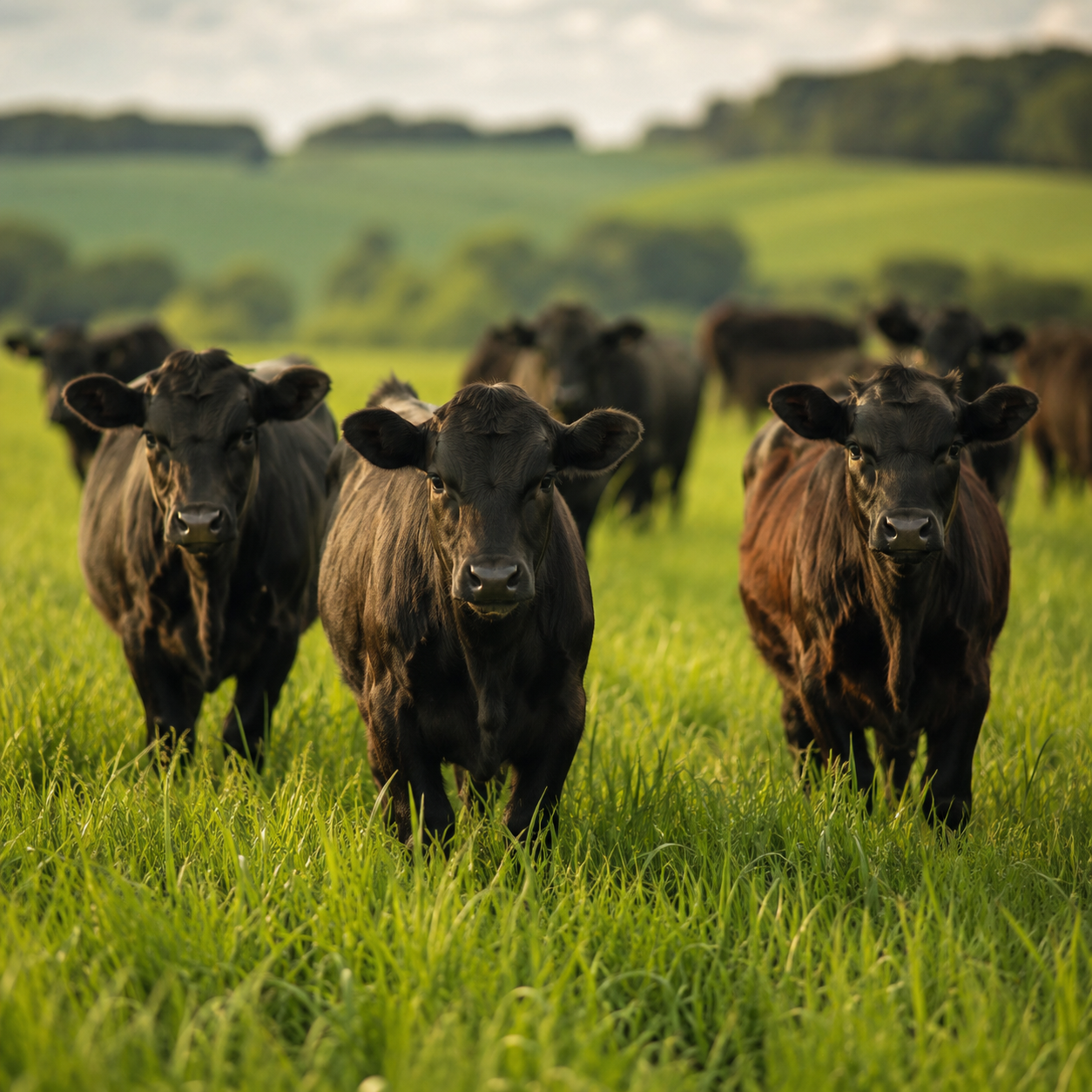
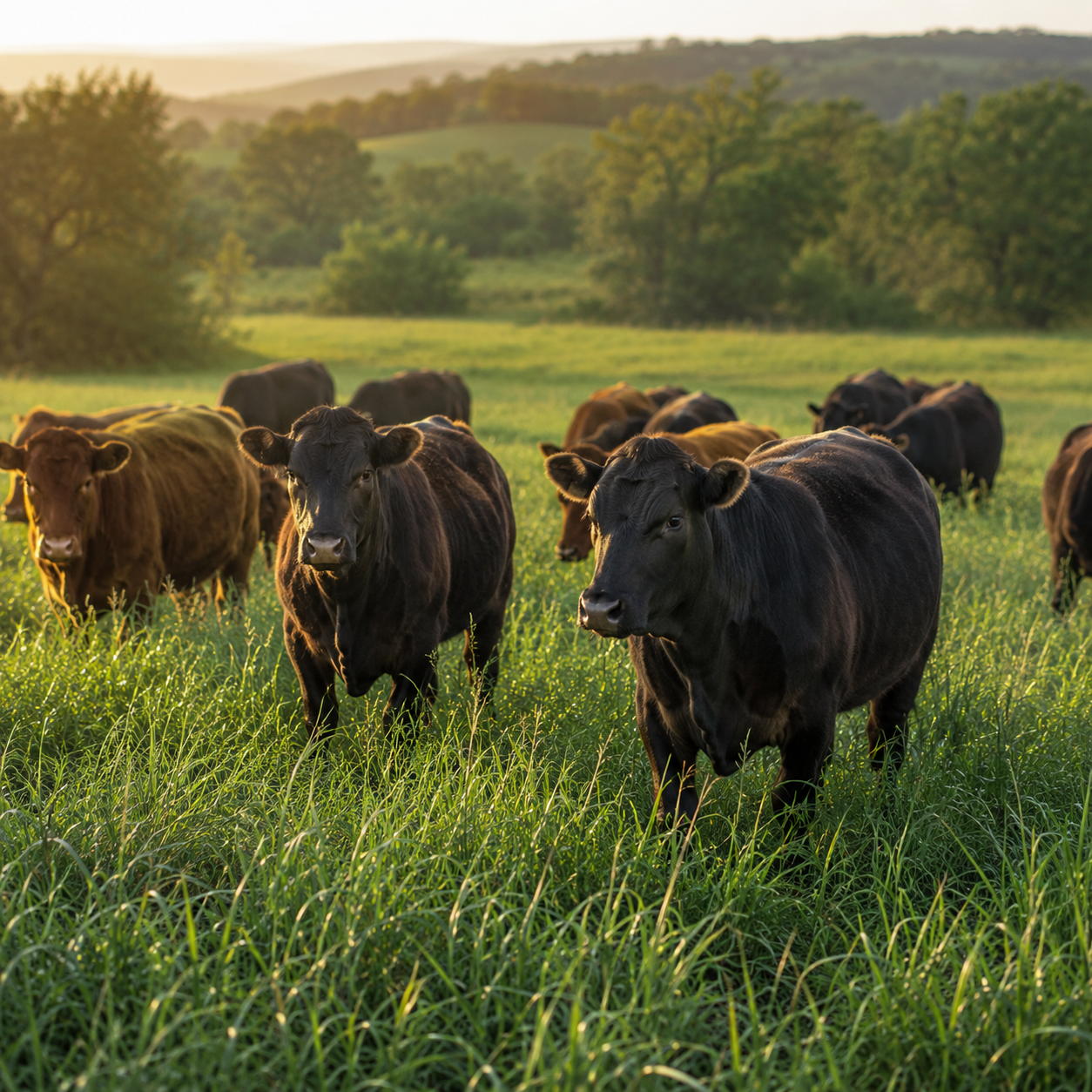
AP-5 cattle on toxic tall fescue
AP-5 Applications

One Program.
Multiple Cattle Classes.

AP-5 supports cattle on toxic tall fescue through binding, deactivation, and circulation support — helping protect heat tolerance, breeding performance, cow condition, and calf growth.

Mature cows on fescue pasture
Mature Cows

Breed. Hold Condition. Raise Calves.

4–6 oz per head per day

Use during fescue grazing, with added focus during breeding season and late gestation to support conception, cow condition, and calf performance.

Breeding Support Cow Condition Calf Growth Heat Tolerance
Stocker cattle on pasture
Stocker Cattle

Intake. Gain. Heat Response.

2–4 oz per head per day

Adjust based on forage conditions, ergovaline pressure, and performance goals to support intake, gain, and thermoregulation.

Intake Support Gain Consistency Heat Response Fescue Pressure
Replacement heifers on fescue pasture
Replacement Heifers

Develop. Breed. Perform.

4–6 oz per head per day

Prioritize during development and first breeding to support reproductive performance under fescue pressure.

Development First Breeding Reproduction Performance
Feeding rate should be adjusted with your nutritionist based on cattle class, forage conditions, season, and observed fescue-toxicosis pressure.
AP-5 Field Trials

Validated Across Real Cattle Programs

AP-5 field data connects toxic fescue support to measurable improvements in body temperature, conception rate, calf weaning weight, cow condition, and herd-level performance.

01
Angus Heifer Breeding & Temperature Trial

Lower Body Temperature. Higher Conception Rate.

In a fescue pasture trial, AP-5 heifers showed a lower rectal temperature and stronger first-service A.I. conception performance compared with controls.

1.4°F Lower rectal temperature
+15% Higher first-service A.I. conception rate
26 hd Control and AP-5 groups
02
Missouri Cow/Calf Farm Trials

Heavier Calves. Better Cow Condition. More Bred Cows.

Across three Missouri farms, cows were split into control and AP-5 groups. AP-5 groups showed measurable improvements in cow weight, calf weaning weight, and bred cow percentage after 60 days.

353 Total cows across three farms
+63 lbs Average calf weaning weight improvement
+5% More bred cows after 60 days
03
Producer Records Trial

Large-Scale Records Across Multiple States.

Combined producer records from Missouri, Arkansas, Iowa, and Oklahoma reported herd-level performance across cattle fed AP-5 or 454 Spice Mix in mineral or tubs.

12,447 Cows represented in records
97.8% Average calving rate
97.1% Average weaning rate

AP-5 Field Trials

Testimonials

Untitled-1

From Our Blog

Industry News & Insights

Heat Stress in Cattle

Heat Stress in Cattle: How 454 Supports Dry Matter Intake and Summer Performance

Heat stress can reduce intake, disrupt rumen consistency, suppress gains, and increase risk during summer weather. Learn how 454 supports…

Read more

Heat Abatement in Cattle: Why Intake, Circulation, and Timing Matter During Summer Stress

Fescue toxicosis can quietly reduce intake, reproduction, and weaning performance in cattle grazing endophyte-infected tall fescue. Learn how AP-5 uses…

Read more

How 454 Helps Cattle Maintain Intake During Heat Stress

Heat stress can reduce intake, disrupt rumen consistency, suppress gains, and increase risk during summer weather. Learn how 454 supports…

Read more